YouTube Channel: http://www.youtube.com/@watermarks31
Fishing Islands https://youtu.be/fwTDTmtCh3o
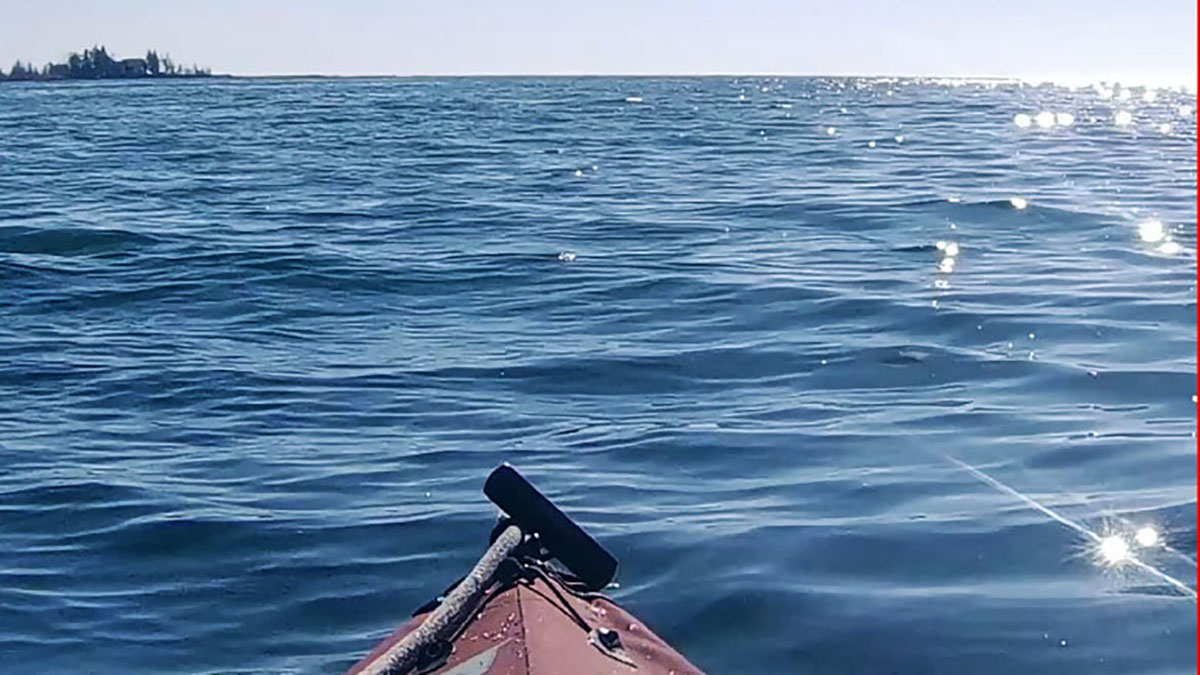
For the kayak paddler, time is given over to the elemental movement of water. Paddling the waters of the Fishing Islands on the west side of the Bruce Peninsula, Ontario, is to enjoy slipping over shallow ledges and through standing reeds in the company of the Common Loon, Great Blue Heron, Caspian Tern, and Osprey.
The Fishing Islands (referred to as the Ghegheto Islands by H. W. Bayfield in his 1822 survey) is an archipelago of 200 islands stretching some 20 kilometres along the western shore of the Bruce Peninsula, Ontario. The downdip of the peninsula's east-to-west bedrock configuration creates a gentle entry into the west-side lake where relatively shallow waters wash against flat laying rock.
For thousands of years, the Indigenous Peoples of the region harvested fish from the rich waters of the islands. However, with the arrival of non-Indigenous settlers, the islands' natural wealth led to the development of commercial fisheries. The 1830s saw an influx of commercial harvesting of lake whitefish, lake herring, and lake trout, with the Huron Fishing Company reporting in 1835 the harvest of 10,000 barrels of herring and 5,000 barrels of whitefish and trout for the United States market. Understandably, complex relations between the commercial operators and the Saugeen First Nation developed and continued for years when resource depletion finally led to two treaties signed in 1885. Through Treaty No. 222, signed by the Chippewas of Nawash, and Treaty No. 223, signed by the Chippewas of Saugeen, Indigenous rights to the islands were surrendered to the Canadian government. In 1969, however, 89 islands were returned to the Saugeen First Nation, and in 2013, the Saugeen First Nation fishers became the sole licensed commercial operators in the islands' waters.
During the latter years of the 19th century, the islands became the focus of vacationing campers, and by the early 20th century, the islands were surveyed and sold. Following the enthusiasm of the islands' early visitors and property owners, many generations of campers and cottagers have cherished both the wrath and serenity of the Fishing Islands' waters, cherishing their natural and cultural histories for their diversity and complexity.
Rising Tide https://youtu.be/7GNechHhTPk
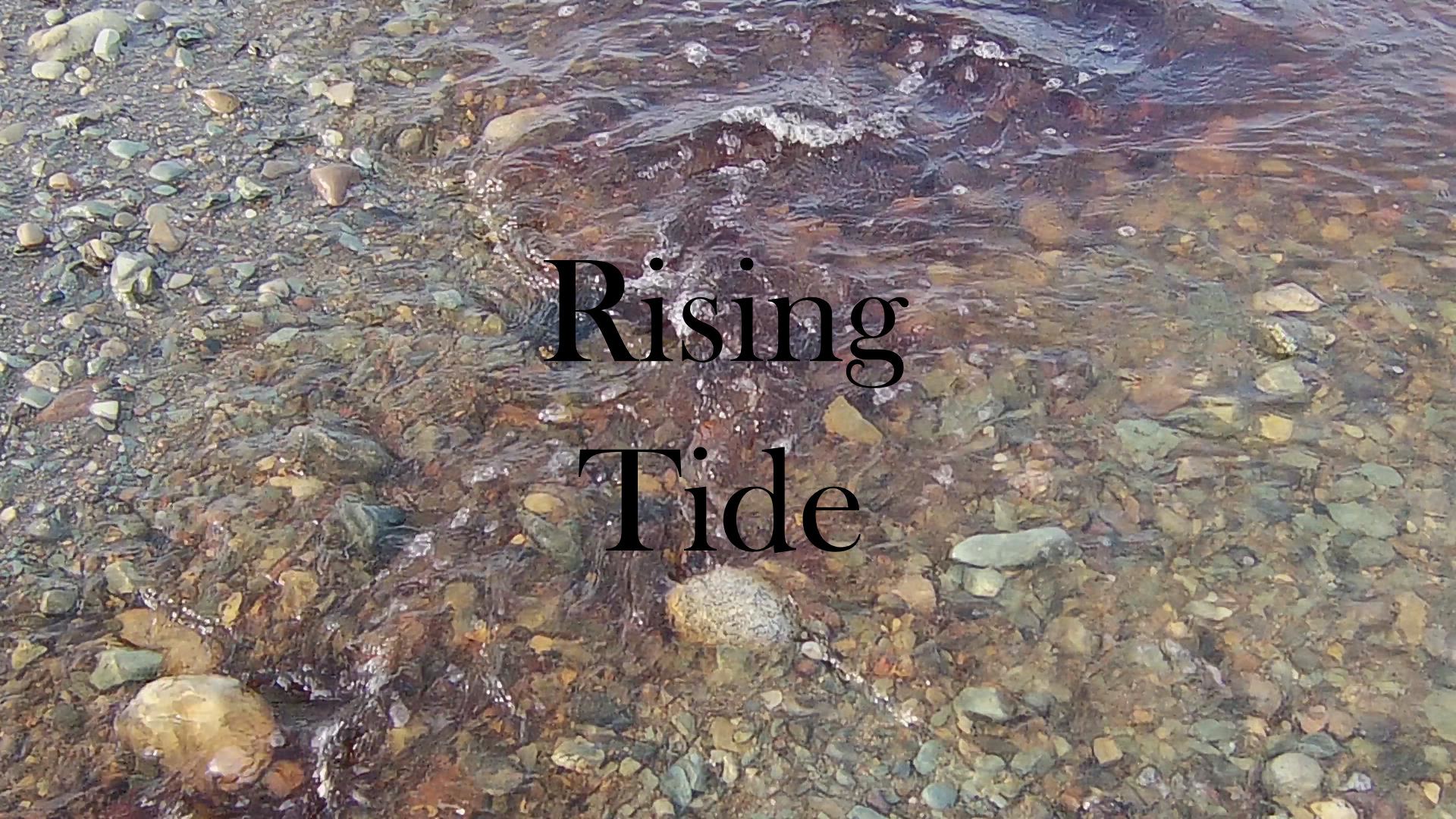
The natural world is perpetually in a state of flux. Tides manifest this transformation; with flow and sound, water animates the shoreline.
The tides in the Bay of Fundy are the highest in the world. The shape of the 280-kilometre (174 miles) long Bay is similar to a funnel such that the flood waters are squeezed into the shallower and narrower end at the Minas Basin and thus forced up into vertical height. Due to this natural configuration, the height of the tide increases from the Bay’s mouth to its end. At the mouth of the Bay, the tide reaches a height of six to seven metres (twenty to twenty-three feet), whereas at the Bay’s end, the tide can reach an astounding height of sixteen metres (52 feet). The volume of water entering and exiting the Bay during each tidal cycle equals one billion tonnes, exceeding the total combined volume of the world’s rivers. In terms of power, it is estimated this movement of water has the power of 25 million horses or 8,000 locomotives. Consequently, current research suggests that in-stream turbines located in the Minas Passage at the head of the Bay could generate 2.5 GW of power, potentially powering over 800,000 homes. At the mouth of the Bay on White Head Island, where this video was filmed, the vertical height of the tide reaches five metres (16 feet). Conversely, its horizontal slip at low tide equals 237 metres (777 feet), creating an expansive intertidal zone. At low tide, the intertidal zone displays its wealth of dulse, rockweed, barnacles, periwinkles, scallop shells, the spine-covered skeletons of sea urchins, and tumbled sea glass. As the tide floods, the water returns with the common loon, red-breasted merganser, long-tailed duck, harlequin duck, and common eider harvesting the wealth of marine life that streams back in on the returning flow.
The cycles of flood and ebb turning every six hours and seventeen minutes (average time recorded during the February 1 and February 7, 2024 period) denote consistent movement. Ironically, this change represents the constancy in the relationship between the gravitational pull of the moon and the spinning system of the moon and Earth. Watching the rise of the tide in detail offers the visual manifestation of the earth’s stability—its unending, steady pattern of movement.
Pond Work https://youtu.be/9c6vCqXE0So
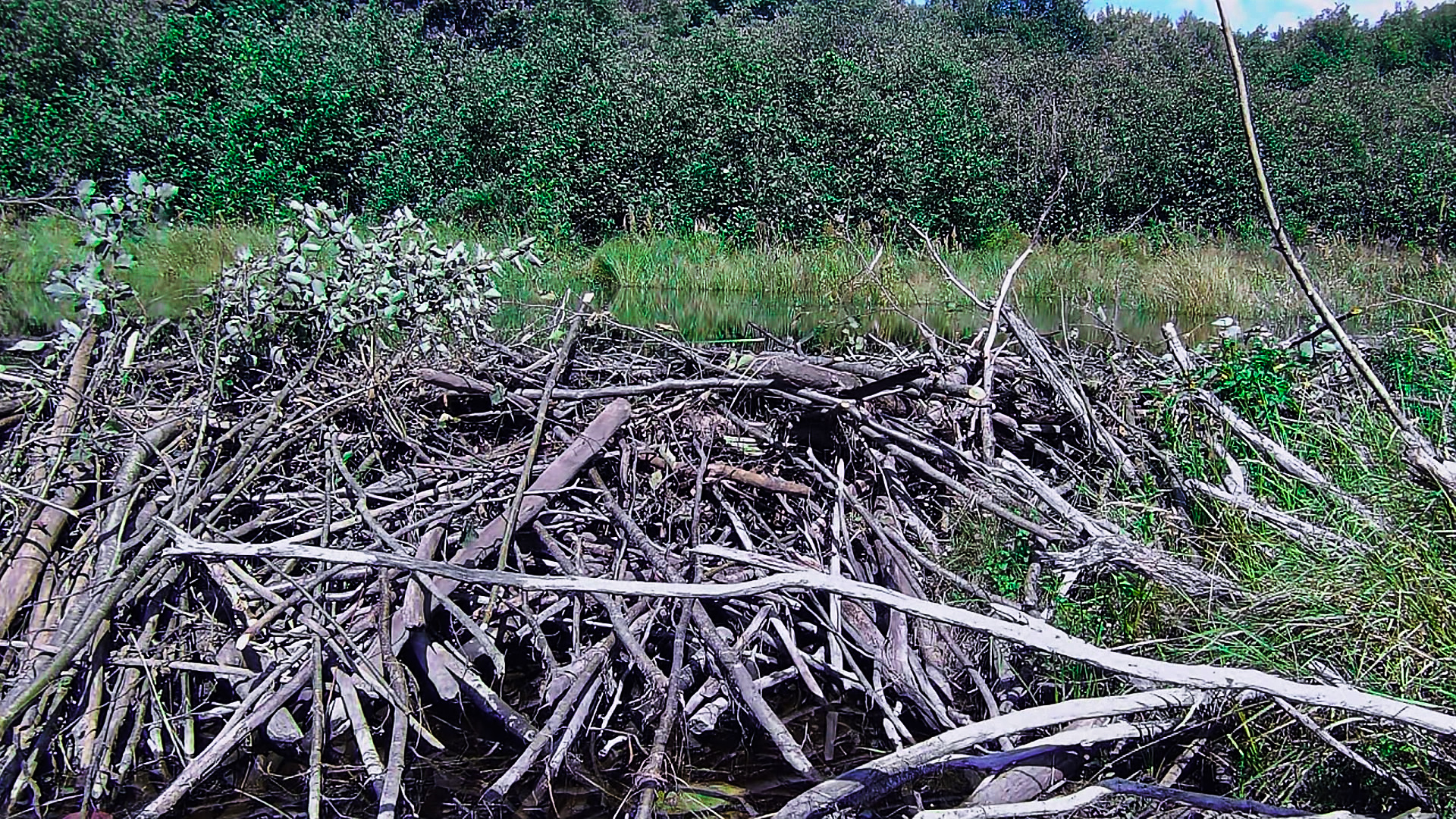
The beaver (Castor canadensis), as stated by historian Harold Innis, “profoundly influenced” the history of Canada. In the latter half of the sixteenth century, beaver fur became valued when the European apparel industry embraced the beaver fur hat as high fashion. This was the genesis of the Canadian fur trade, and for the next three centuries, the beaver and other fur-bearing mammals were hunted and trapped in an economic system of trade between European traders and Indigenous hunters and trappers. Beaver fur was extremely lucrative, with the Hudson’s Bay Company reporting more than 1.1 million pelts sold in 1868.
Yet, the beaver's significance transcends its economic value. It is a true ecological engineer. Its dam-building activities create a diverse wetland ecosystem of ponds and meandering streams, providing habitats for a myriad of wildlife and botanical species. Research suggests that the biomass of wildlife in areas with beaver dams could be up to five times higher than in waterways without beavers. Importantly, the beaver's leaky dams play a vital role in water regulation, mitigating the risk of floods. The ponds formed by these dams act as natural filters for sediments and nitrogen sinks. Aquatic plants and bacteria absorb the nitrogen, while the sediments trap carbon. In this way, the beaver, through its natural behaviours, leaves a positive imprint on the environment and climate.
Poling up the stream toward the beaver dam, the soundscape is composed of bird voices, insect sounds, and wind through the grasses and trees. As the dam is approached, though, the soundscape changes as the pond leaks through the tangle of woven tree trunks and branches to produce a gurgle and murmur of falling water. At this point, the beaver dam creates the keynote sound, a background tone against which other sounds and voices are realized. Subsequently, as the boat moves away back down the stream, the keynote sound of the dam gradually transmogrifies back to the wind-swayed grasses and bird voices and a much more delicate soundscape.
Wetland Minstrelsy https://youtu.be/wq795Va9uiw
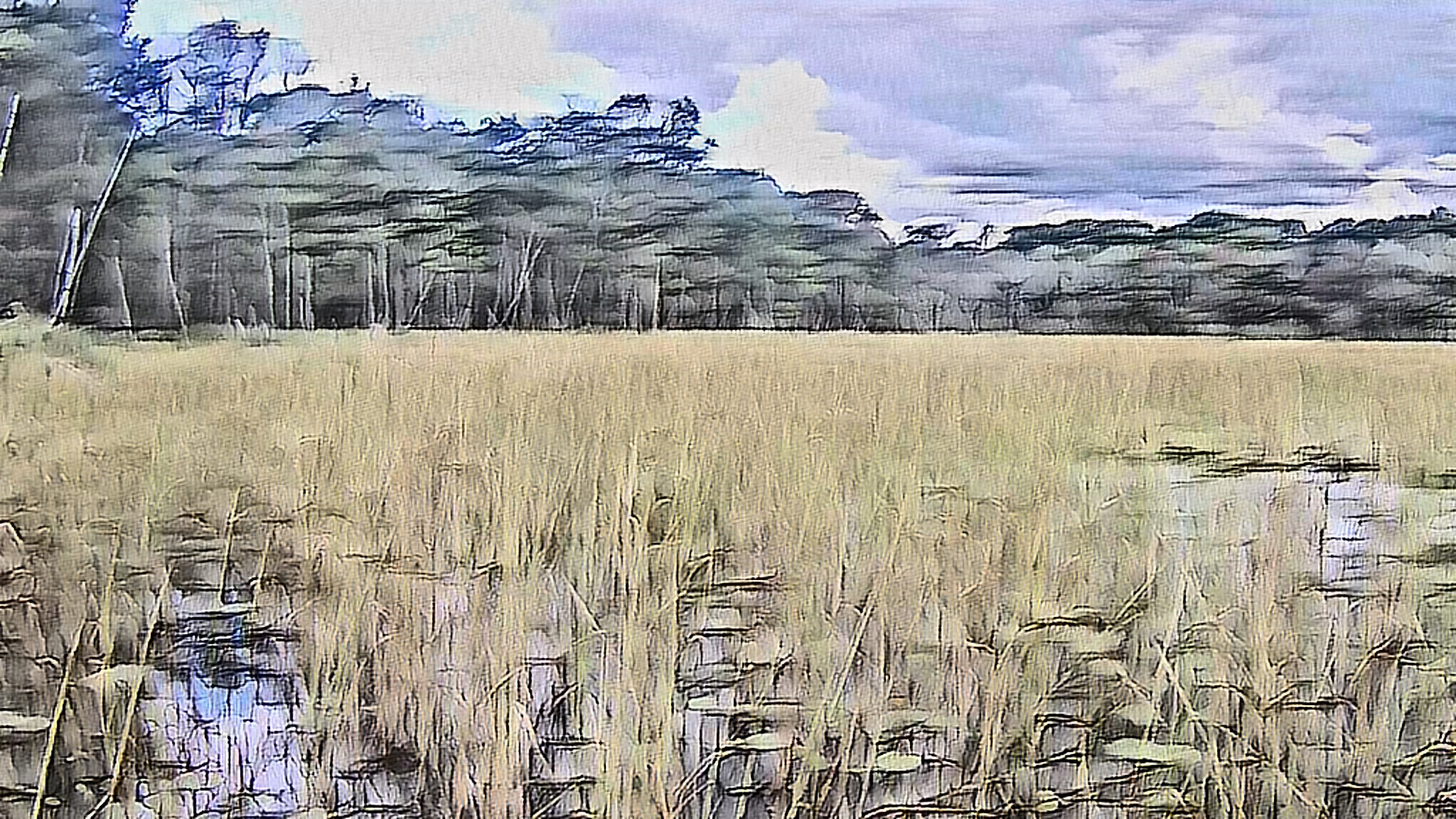
I have rowed past this wetland numerous times, principally when conveying Dylan from the trawler to shore and back to care for her personal needs. A wood rowboat is my studio, and in due time, I answered my desire to enter the wetland to sit idle within its heartland. The wetland, a northern extension of a large bay that is our anchorage, is an environment of its own, a habitat where lily pads, grasses, and rushes bordered by bush embrace its mixed and resonant inhabitants.
The camera set on a tripod, and two microphones positioned on a stereo bar hover over the recorder placed on a cushion above the boat's keelson. It is early evening, and crickets provide a background timbre beneath the emphatic “peek” of a hairy woodpecker. A wood duck is seemingly nearby, and a distant great horned owl and a common raven and northern flicker, more central, offer solos. But with their ardent assertions, the bullfrogs eventually take the vanguard, enriching the wetland minstrelsy.
Ocean Choreography www.youtube.com/watch?v=c-kM1PX_Joc
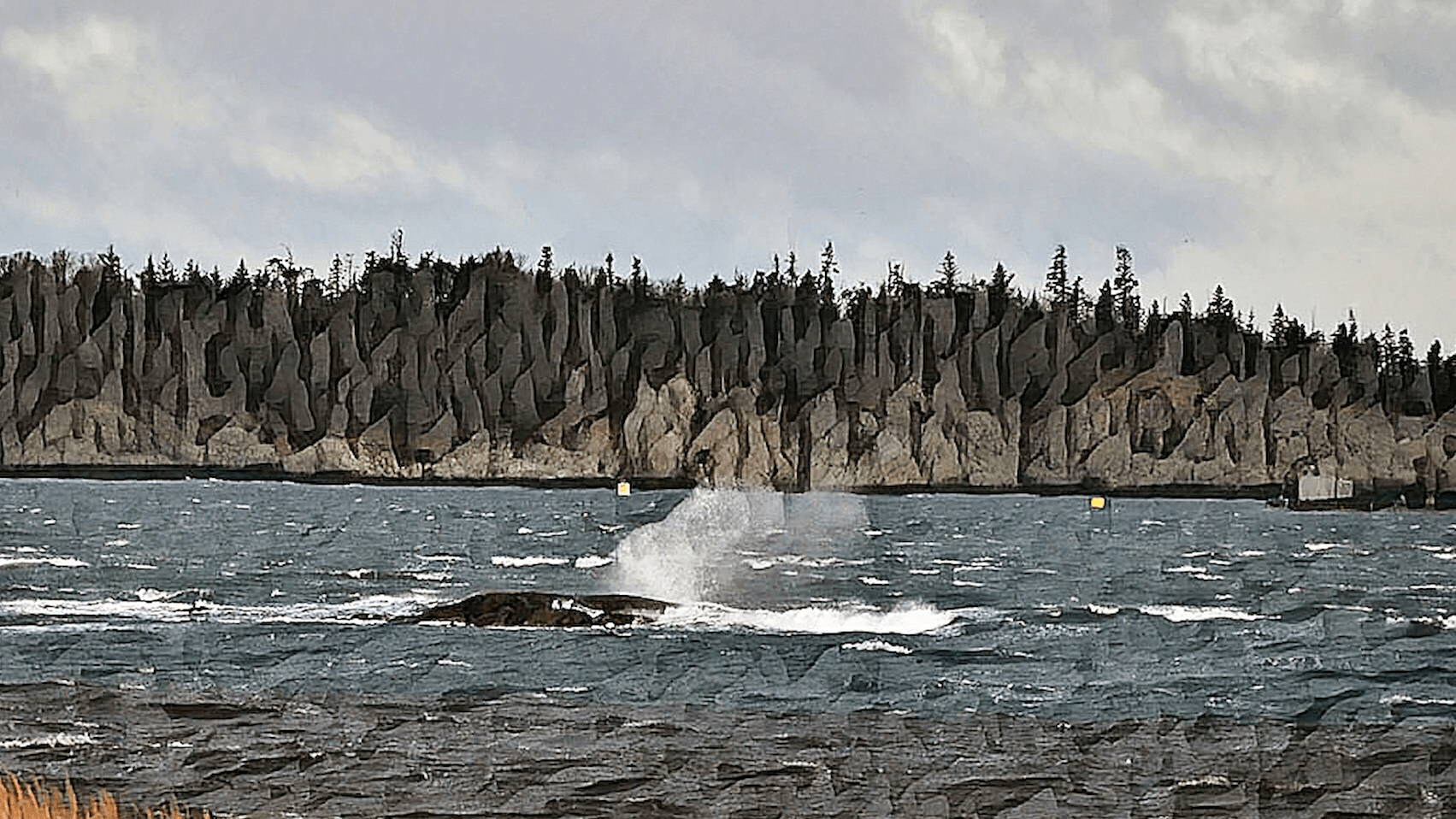
I walk this beach daily. Daily, I walk a neonate beach, a palimpsest of layers and shapes that shift and change with each wave, a reminder that water is a shapeshifter, one of nature’s tireless sculptors. Waves that break in high crystal explosions bloom against tide-bare outcroppings. Waves that display mellower moods offer mergansers gentle rides over rolls that curl around previously battered outcroppings.
These mellower waves react; they do not demand. They let the shore define their shapes in patterns. Like a tailor laying down a ribbon they follow the shore, extending rolls to their final curl and surrender to the pebble-embroidered slope.
On the Beach https://youtu.be/rnT7veKJCxI
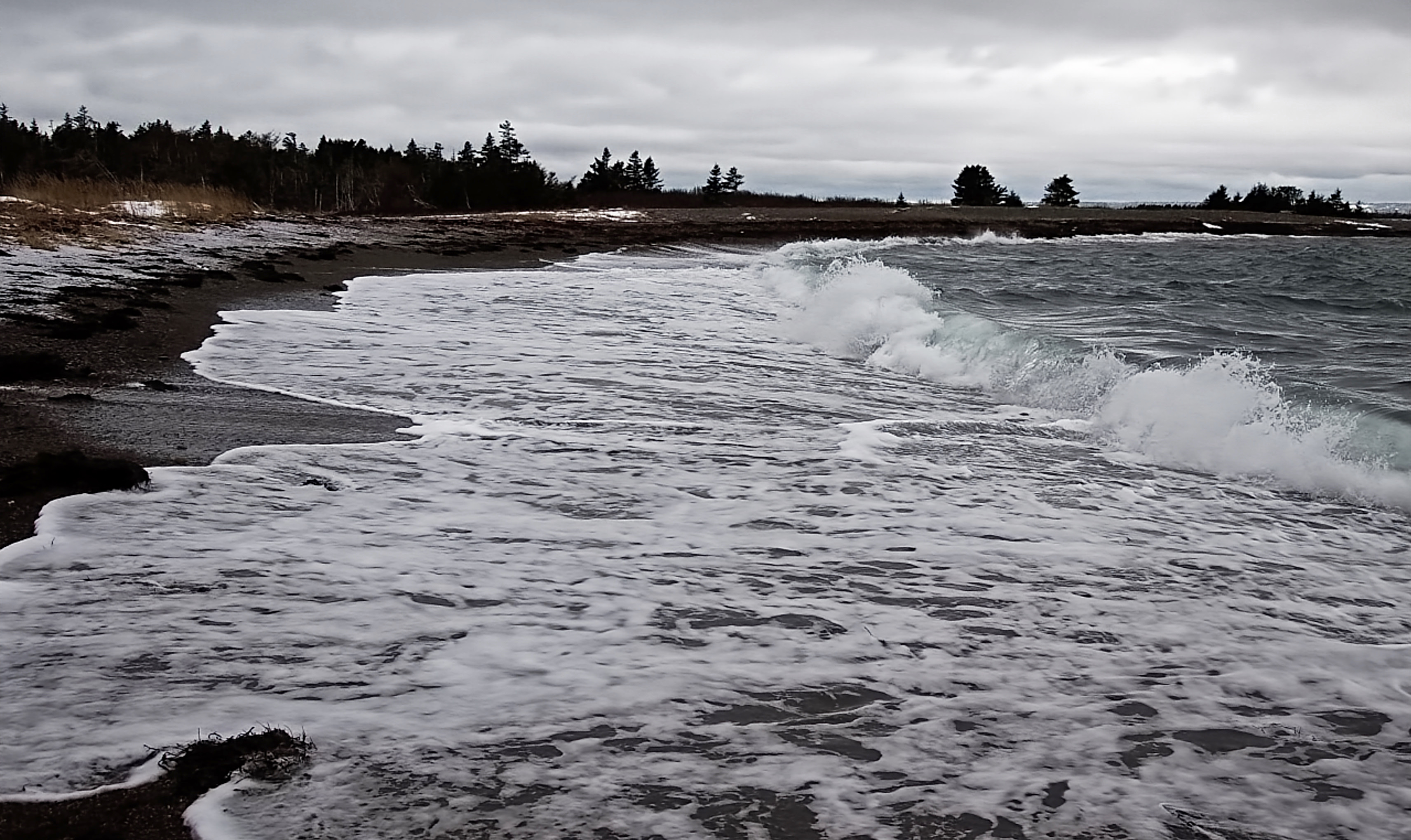
Water is a shapeshifter! From creating and destroying dunes to altering the beach’s surface and structure, the ocean is a generating force. “Inhumanly sincere” in its implacable churn and indifference, reflected Henry David Thoreau of the Cape Cod surf. In turn, the beach is a liminal space—an edge of neutral ground that endures the flux and reflux of waves. In the tumult of a single, ahistorical gesture, the ocean belches forth Nature’s and humanity's detritus as it exposes ancient, underlying beds of peat. Constant and creative, they link together in reaction.
4 minutes https://youtu.be/TNazH-FWKyw
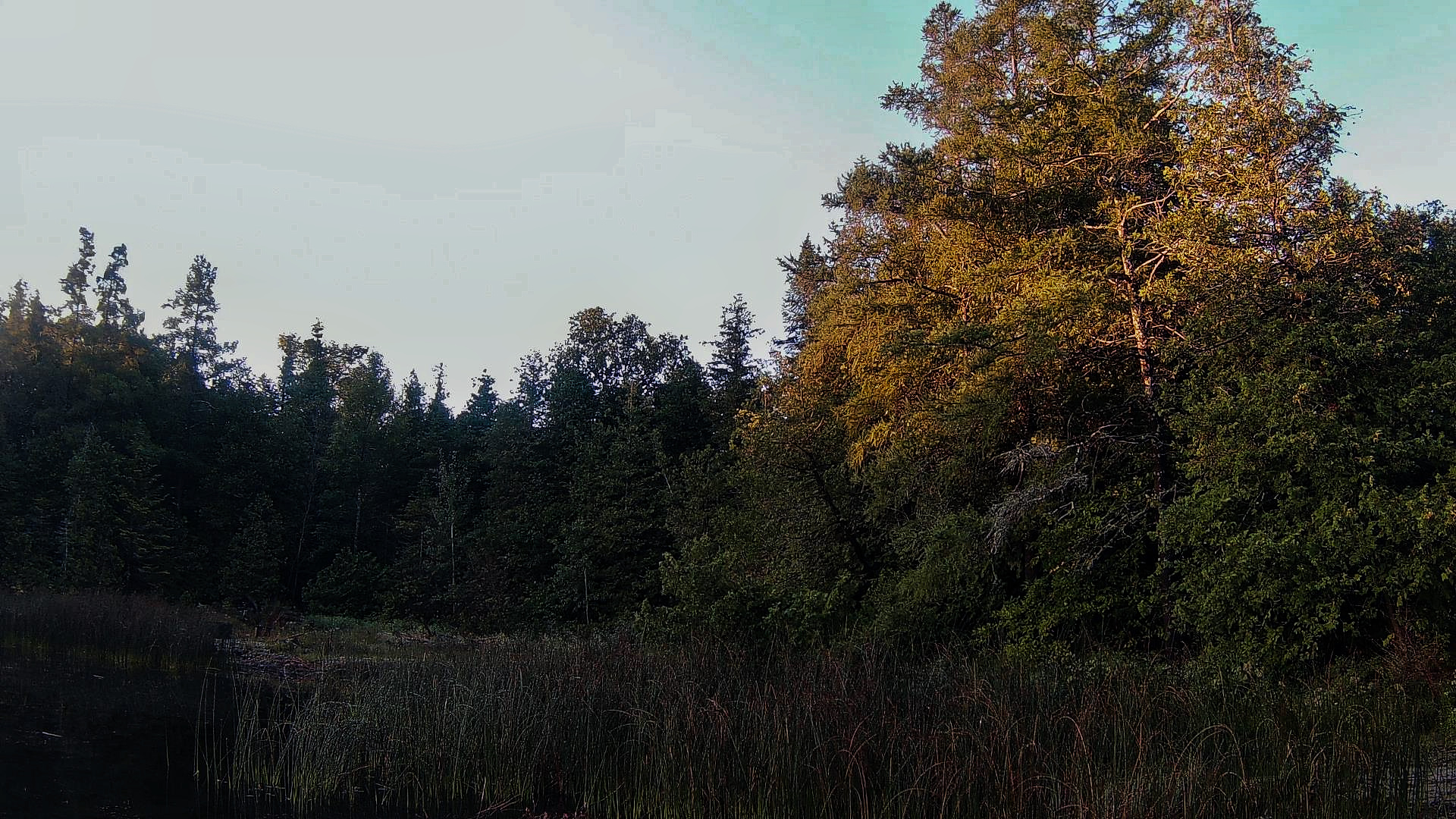
Silence is freedom—freedom for the uninterrupted expression of the natural. Silence is an enchantment with the right to exist. However, it is delicate without monastery walls offering sanctuary from invasive interlopers. Here, in the dawning, as the sun’s rays gently sweep over cedars, the jubilant phrases of a red-eyed vireo command attention and, for four minutes, give silence it's standing.
Uncertain Stillness https://youtu.be/MoBsxgSNOmA?si=EkWSMqI7bT_9FVVh

Minimal visual references privilege sound— rhythmic sigh of waves, caution of fog horn, Canada geese honking in flight. This uncertain stillness--a seascape where water and sky blend with patterns of sound and patterns of light.
Night Music https://youtu.be/YycLq0SN8UE
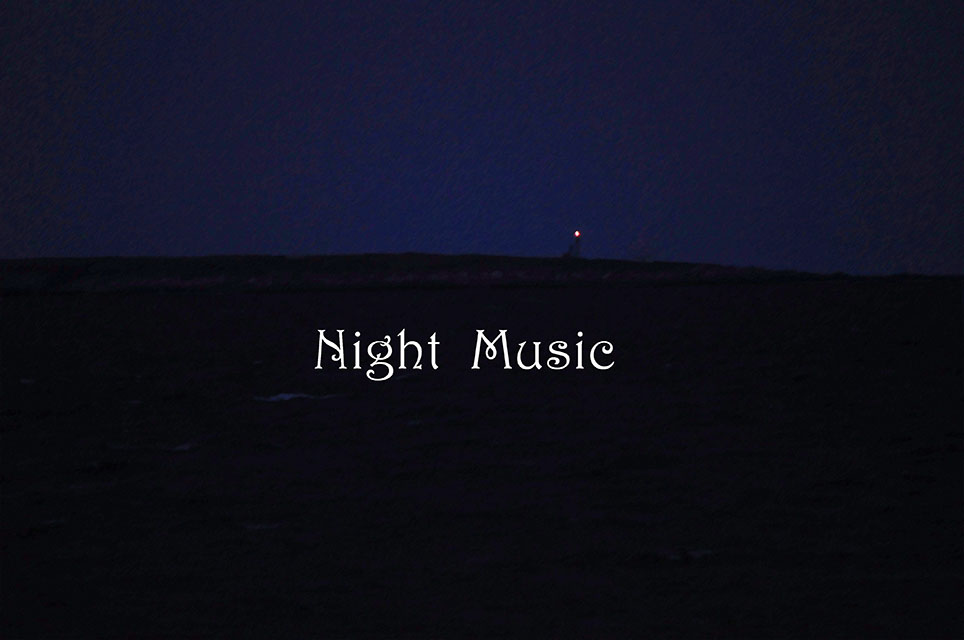
The horizon we see, the sounds we hear, the sensations we feel, and the knowledge we gain from them convey a local ambiance—an expression of place. A winter wren trills from the bush. An American woodcock’s "peent" and flutter reveal its damp alder ground. Across the cove, an island light—single beam rotating in association with a distant fog horn—offers caution to inbound trawlers. Waves break and push pebbles up the beach, providing a low undertone to the higher pitch of placid rain. Slow-strung notes of a weathered piano and a metal guitar join the night.